
While this article mentions WordPress because that is my expertise, other Content Management Systems have these problems too.
Open source platforms result in a wide variety of developers contributing to plugins, themes and templates If you think about it, because it is open source, there are so many ways you can mess with it. This is a great advantage but it also has disadvantages.
The Biggest Problem with WordPress Starts with the Themes
A bad theme choice is a curse for any website. Most people think of themes as the look and feel but the best themes are designed to be lean, fast and ADA friendly.
Unfortunately good design has been replaced with template based designs which often don’t use best practices for ADA compliance, SEO, Usability and resource usage.
The Slowest Parts of Any Website
- Images
- Lots of Code (Code Density)
- Too many files
- Unused resources
- Remote Files (usually scripts and fonts)
Some people would add web hosting to the list. Quality web hosting does matter but a really well designed website will load faster on any server while a badly designed site will always be slow.
Why Speed Matters
Usability, Sustainability and SEO
Usability
Many people assume that page speed only matters on mobile devices. The truth is that it matters all the time. Humans can detect a 0.1 second delay. So when they load your website they expect things to work right away. When things don’t work trust goes down and sometimes they will leave your website.
- More desktops & laptops are using WiFi instead of hardwired connections so the user experience as actually gotten worse!
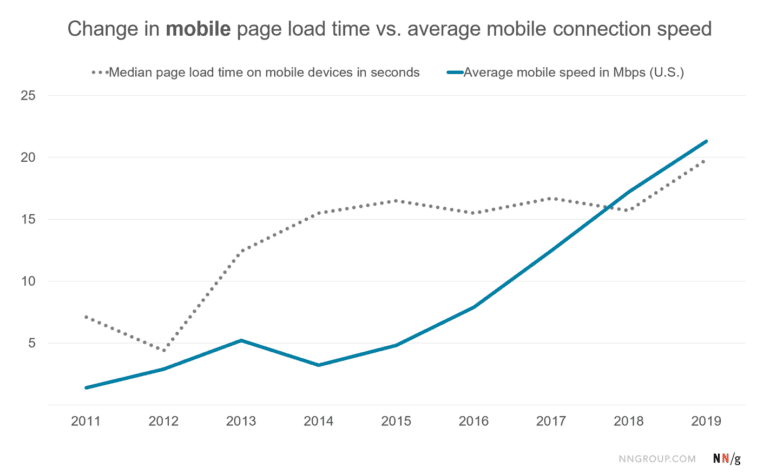
- Mobile Devices are faster than ever but websites load more slowly because they are bloated (see image)
Sustainability
Sustainable web design is really a thing. The internet uses tremendous energy. Good design considers best practices and therefore leads to a sustainable website.
Even Google is considering page speed, best practices and resource usage.
What about fonts? Fonts can be loaded locally to end up with a faster website. Is that sustainable? Nope. Loading Google fonts from a local server is not as sustainable as using Google’s servers to load them. The best practice is to ensure that text is visible even before the font has downloaded. Also choosing fonts wisely comes into play because the size of the font file has a significant impact on how fast it loads.
Search Engine Optimization
The biggest motivator for a fast website is SEO. Why does page speed affect SEO?
- Bounce Rate is increased on slower websites
- Trust is lowered when websites respond slowly
- Page Speed is a Search Engine Results Page Ranking Factor for mobile search (and probably desktop search in the future).
The simple truth is that a high quality website has to be designed for high performance.
WP Tech Guru builds fast loading website every time. If you need a new website we will do it right the first time (we have rebuilt many slow websites for clients but you can avoid that problem). We also offer WordPress Optimization through our WPTechGuru service.
References:
- Whitenton, K. (2020, May 17). The Need For Speed, 23 Years Later. Nielsen Norman Group. Retrieved May 18, 2020, from https://www.nngroup.com/articles/the-need-for-speed/
- Schwartz, B. (2018, January 17). FAQs On New Google Speed Update: AMP Pages, Search Console Notifications & Desktop Only Pages. Search Engine Land. Retrieved May 18, 2020, from https://searchengineland.com/faqs-new-google-speed-update-amp-pages-search-console-notifications-desktop-pages-289929
- (n.d.). WPO Stats. WPO stats. Retrieved May 18, 2020, from https://wpostats.com/