
Among other factors, Google has suggested that page speed affects ranking of websites. We’ve seen that this is absolutely true, and we predict that, over time, performance will increase in priority among the ranking factors. This may seem like a new topic, but Steve Souders (a Google employee) wrote High Performance Web Sites: Essential Knowledge for Front-End Engineers1 as far back as September 2007. Since then, Google has made many contributions to enable developers to create better performing websites.
- In 2015 Google released the Page Speed Insights SDK (Software Development Kit: a set of tools for developers)
- In 2018 Google launched Google Lighthouse to make it easy for developers to test websites
- In 2020 Google defined performance metrics called Core Web Vitals
- In 2021 Google made web performance metrics a ranking signal
While none of these tools is perfect, they prove that Google is concerned about website performance and accessibility. Today, you will notice that the Google Page Speed Insights product description says “Tools and information to help you build high performance web sites.”
Our view is that all these things go hand in hand: best practices, performance, and accessibility. It is clear that Google considers all of these important.
Does Website Performance Really Make a Difference in Google Ranking?
In 2021, Google made performance a ranking signal (ranking factor). We expect that in the future it will be weighted more heavily along with accessibility.
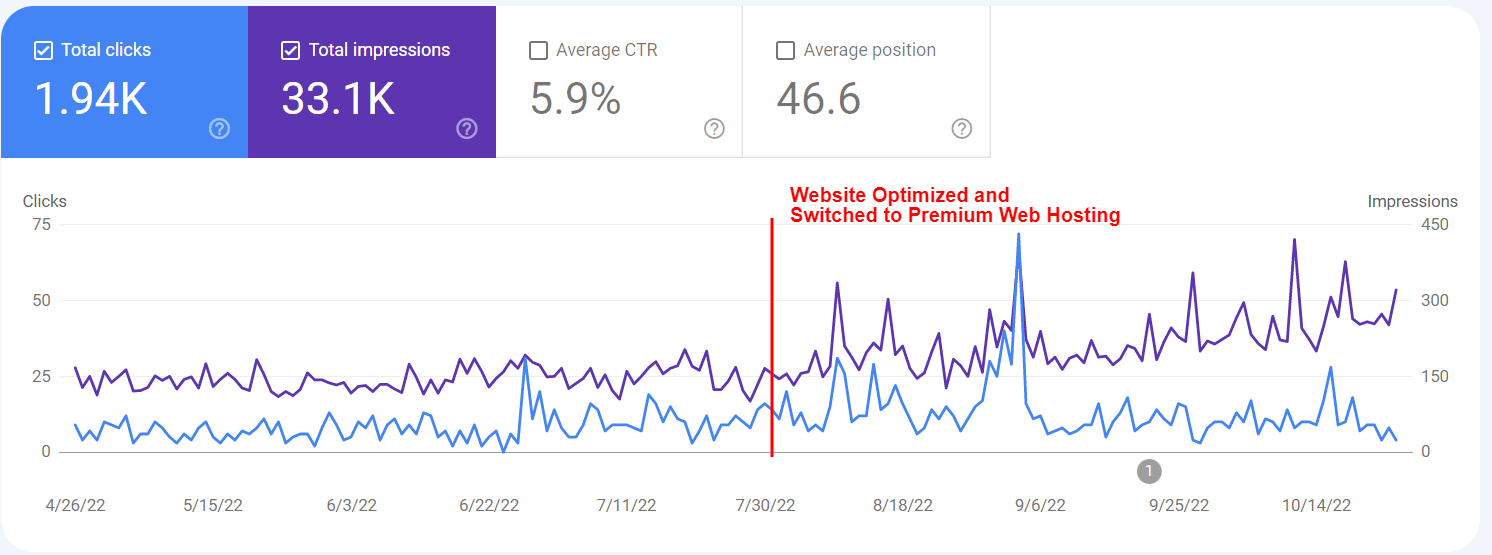
This is anecdotal information from a website with significant traffic. The graph below clearly shows a dramatic increase in traffic after WordPress Optimizations were made to make it load faster, including switching to a premium web hosting platform. No other significant changes were made to the website during this period.
Citations
1Souders, S. (2007). High Performance Web Sites.