
If business owners understood how poorly their websites were built they would have them fixed immediately. Business owners are seduced by the flashy, busy appearance of “multi-purpose” themes which are in essence templates for designers to plug and play in their rush to build websites quickly and cheaply. Appearance is how bad websites get sold to businesses & non-profits.
The problem with fixing a badly built site is that there is so much wrong with it, to do a proper job you’d have to rebuild the website.
Sometimes the cause is cutting corners but poorly built websites exist at every price level from the discount designer from a freelancing website all the way up to extremely expensive agencies the websites produced border on terrible.
A serious business owner has no business cutting corners on website design. There is no substitute for following best practices. What are web design best practices? Enter the Web Design Sweet Spot. Typically the sweet spot is a balance of elements which result in some compromise. BUT what if you don’t have to compromise?
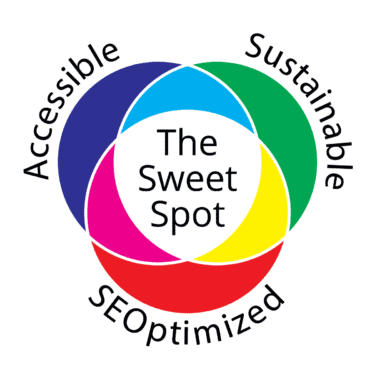
Search Engine Optimized Web Design | The Sweet Spot
Believe it or not, Accessible Design, Sustainable Design and Search Engine Optimization (SEO) can all be achived at the same time..
Accessible Web Design requires good SEO practices and vice versa.
Good Web Design is efficient, uses best practices for layout, for resource usage, and for usability therefore it is sustainable design. Sustainable Website are FAST.
Sustainable Web Design changes which elements are usable because they waste resources or cause usability problems. The pinacle of usable design equals accessible design.
Of course web design best practices is a big topic including coding, selection of image types & sizes, SEO best practices and usability best practices too.
Why Web Designers Fail to Use Best Practices
There are two main reasons that web designers typically do not use best practices:
- Lack of Awareness
- Laziness
- Not Using the Best Tools
Lack of Awareness of Best Practices by Web Designers and Agencies
Keeping up with web design best practices and WordPress takes a lot of time and effort. You have to keep up with Wordpress news, changes to technology and changes to the the programs themselves behind WordPress like HTML5, CSS, PHP and Javascript. Some designers are so focused on design and their own process they don’t take the time to read articles and research industry changes. Sometimes designers are within an agency and aren’t expected to keep up with changes, they are production workers. Like in a sweatshop quality isn’t always the top priority.
Laziness
I talk to design professionals frequently. Often I learn about changes in the industry simply by checking with my friends who are working in the same industry as me. Some designers will literally say “oh, SEO isn’t my priority” or “I don’t pay much attention to Accessiblity”.
This is frustrating to me because I deal with bad websites all the time. As part of my WP Tech Guru WordPress support service we provide website management to our clients. Other business owners & non-profits come to use for help when they are frustrated with website performance, tech support or a functional problem with their website. The most common problems with WordPress websites are:
- Bloated Theme;
- Out of date plugins;
- Low quality plugins;
- Terrible SEO;
- Don’t use best practices for design, accessibility or performance.
Not Using the Best Tools
The best tools for a WordPress developer include:
- Code Snippets
- Themes (either self designed or from the marketplace)
- Plugins
- Browser extensions (especially for testing)
- Other developer tools
Why would a Wordpress designer / developer not use the best Code, Themes or Plugins? In the case of Themes and Plugins the biggest reason is budget. Many webs design companies opt for using free themes and plugins when that is a very important decision. There are both free themes and plugins that are excellent but there are many low cost or free themes and plugins that are highly problematic.
Business Owner’s Responsibilities
The sad truth is that business owners have some responsibility in this. They are not very tech savvy so they are at the mercy of a good salesperson. Some basic tips to avoid choosing a bad web designer.
- Interview more than one. I recommend starting with Google Reviews in your area to find a company that has a good reputation. That is super important because companies with good reviews probably have good customer service. Never hire a freelancer. They are likely to disappear or get a job leaving you hanging.
- Look at their portfolio. Are the sites eacy to use? What happens when you use the TAB Key?
- Test a few of their websites on GTMetrix.com and you can get a feel for the attention to detail and how lean a website is. A perfect score is almost impossible because the two scores (Page Speed and YSlow) use different criteria. Those scores tell you a lot about whether a company is using best practices. If you are interested in sustainable web design you will want to be sure that they are building websites that are lean. The total page size should be less than 1/2 of the average (average is 2 megabytes). Page size should be less than 1000KB or 1MB. Lower is better.
- Look for the company using Google Maps. How are their reviews?
- Ask leading questions:
- How will you choose a theme to build my website?
- Who is responsible for hosting? This is important. If they are going to abandon you, consider hiring a company that hosts your website for you.
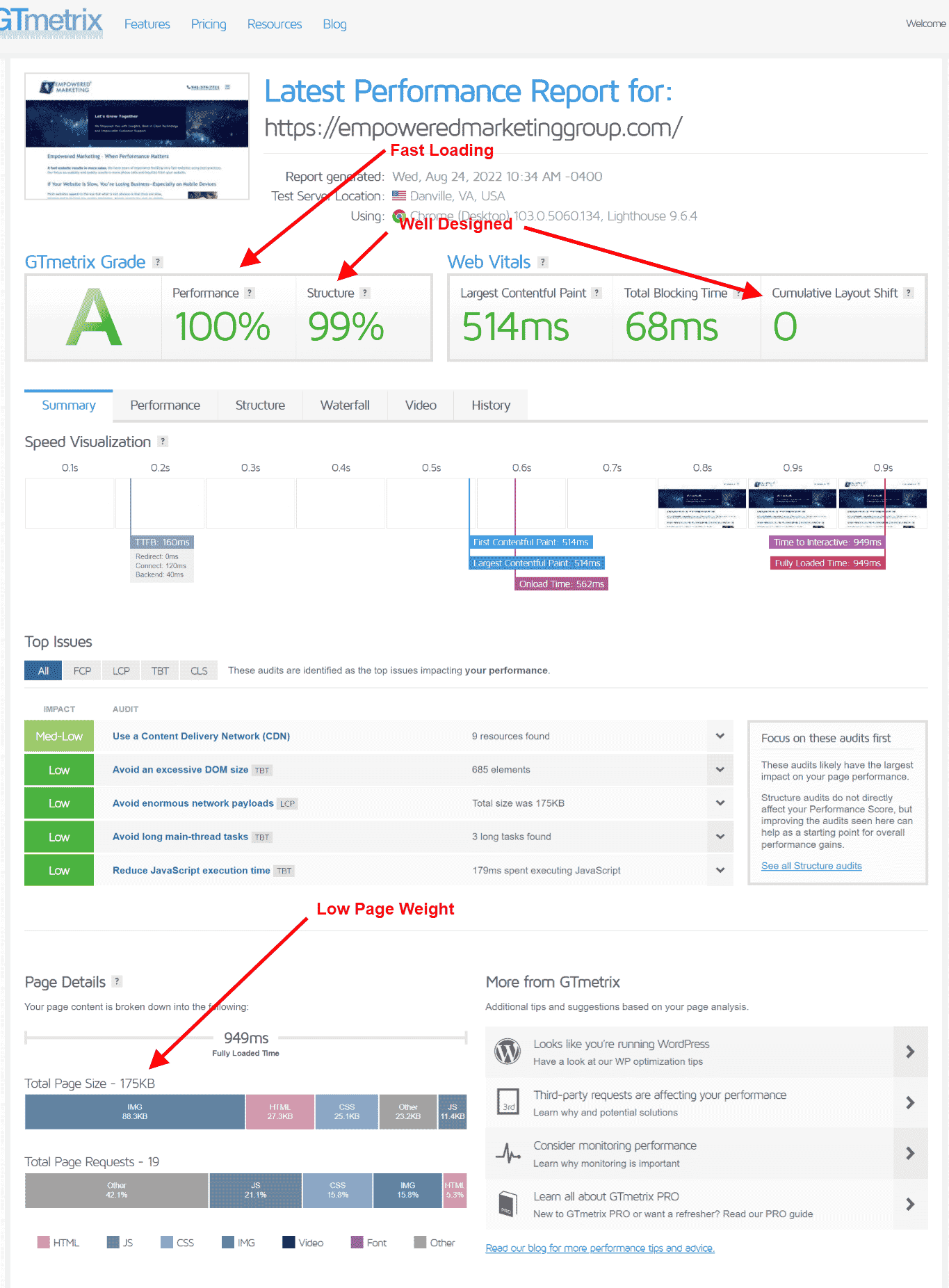
Some developers will say that the scores don’t matter but if you look at a GTMetrix Report carefully you will see the best practices listed. What compromises need to be made to have good performance scores?
- Time. It takes effort to do things the right way.
- Reduce reliance on flashy tools.
- Make sure images are as small as possible for the size displayed.
- So much more.
The best thing about using best practices is that you cover so many things: SEO, Accessibility, Page Speed, Sustainability and Usability. They all work so well together.